Source UL Listed Anti Fire Sealant for Construction, Fire Fighting, and Gas Piping
Compare 30 UL Listed Anti Fire Sealant options from verified Chinese manufacturers. Buyers can evaluate specifications for gas piping, engineering, and fire fighting pipeline applications while reviewing certifications like ISO and SGS.
Key considerations
Products List



Comprehensive Sourcing Guide
Strategic Sourcing Guide for UL Listed Anti-Fire Sealants
Procuring fire-rated sealants requires a rigorous approach that balances technical performance with regulatory compliance. The market for anti-fire sealants is complex, involving specific chemical compositions, rigorous testing protocols, and diverse application scenarios ranging from commercial construction to industrial piping. Buyers must navigate a landscape where product attributes vary significantly between formulations. This guide outlines the critical factors for sourcing high-performance fire sealants, focusing on the intersection of material science, certification verification, and supply chain reliability.
Understanding Fire-Rated Sealant Technologies
The foundation of any successful procurement strategy lies in understanding the specific technologies available. Fire sealants are generally categorized by their curing mechanism and chemical base. The provided data indicates the presence of silicone-based solutions, specifically noting "Silicone Sealant" as a primary type. These products often rely on a "Room Curing" classification, meaning they do not require external heat to harden, which is advantageous for on-site application. The chemical composition often involves "Polydimethylsiloxane" as a main agent, providing the inherent flexibility and thermal stability required for fire barriers.
However, not all sealants are silicone. The data also references "Acrylic Emulsion" as a main agent composition, suggesting that buyers may encounter water-based or hybrid formulations. These acrylic-based products often feature "Caulking" characteristics and are designed for specific bonding applications. It is crucial to distinguish between "Instant Adhesive" formulations and those designed for long-term fire resistance. While some products in the supply chain may boast "Fast Dry" features, fire sealants prioritize long-term integrity under thermal stress over rapid curing. The "State" of the product is typically "Nonfluid" once cured, ensuring it remains in place during a fire event.
Buyers must also consider the "Morphology" of the product. Some listings describe a "Solvent" morphology, while others are solid or paste-like. The "Composition" is often listed as "Organic Material," but the specific ratio of plasticizers, such as "Plasticizer" in the promoter composition, dictates the final flexibility and adhesion properties. Understanding these chemical distinctions is vital because a sealant designed for general-purpose bonding may not meet the stringent requirements of a fire-stop system.
Compliance and Certification Verification
Certification is the most critical filter in the procurement of fire-rated sealants. The term "UL Listed" implies that the product has been tested and certified by Underwriters Laboratories to meet specific safety standards. While the provided data mentions general certifications like "ISO 9001, ISO 14001, ISO 5001, SGS, TUV," these are quality management and general safety standards. They do not automatically equate to fire-rating certification.
Buyers must explicitly verify if the product meets specific fire testing standards. The background information references standards such as "ASTM E814," "UL 1479," "UL 2079," and "ASTM E2307." These are the industry benchmarks for fire resistance. ASTM E814 and UL 1479 are particularly relevant for determining the fire resistance rating of penetrations and joints. UL 2079 specifically addresses the fire resistance of through-penetration firestop systems.
When evaluating a supplier, do not assume that "CE" certification or "ISO" listings cover fire performance. The "Certificates" field in the data lists ISO and SGS, but a specific fire rating (e.g., 1-hour, 2-hour) must be confirmed via the product's test report. Buyers should request the specific test report that correlates the product model (such as "SV-119" or "BLD-119") to the relevant fire standard. Without a specific UL listing for fire resistance, the product cannot be legally or safely used in fire-rated assemblies in many jurisdictions. The "Mildew Proof" attribute is a secondary benefit but does not substitute for fire resistance.
Technical Specifications and Performance Attributes
Technical specifications define the operational limits of the sealant. The data highlights several key performance indicators that are essential for fire applications. The "Bonding Function" is described as "High Temperature Resistant Adhesive," which is a primary requirement for fire sealants. This attribute ensures that the material does not degrade, melt, or lose adhesion when exposed to extreme heat.
The "Application" field lists "Construction," "Woodworking," and "Glass, Aluminum, Fish Tank." For fire sealing, the ability to bond to "Glass" and "Aluminum" is particularly important, as these are common materials in fire-rated glazing and structural framing. The "Color" options, including "Black, White, Grey, OEM Colorful," allow for aesthetic integration, but the "Clear" option is often preferred for transparency in glazing applications.
Physical properties such as "Weatherability" and "Ability: Weatherproof, Waterproof" are crucial for exterior fire barriers. A sealant that fails due to moisture ingress or UV degradation will compromise the fire rating over time. The "Shelf Life" of "3-20 Years" indicates a wide variance in product stability; buyers must verify the specific shelf life for the batch they are purchasing, as older stock may have compromised performance. The "Feature 2: No Toxic" and "Feature 4: Free of Impurities" are important for indoor air quality, especially in occupied buildings where fire sealants might be exposed to smoke or heat.
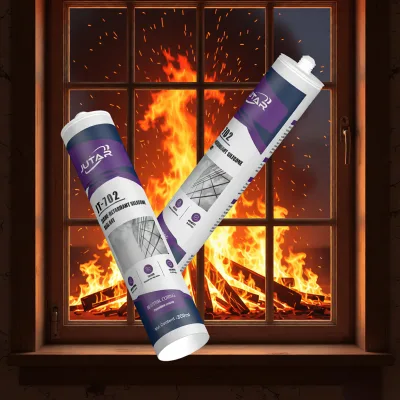
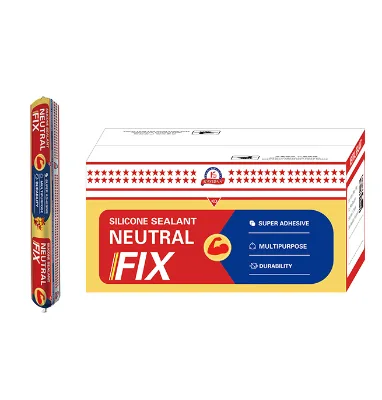
The "Standard" field lists "300ml" and "300ml/200L," referring to packaging sizes. This indicates the product is available in cartridges for small repairs and drums for large-scale construction projects. The "Packing" methods, such as "Cartridge/Sausage" or "Carton," must be suitable for the application environment. For instance, "Cartridge" packaging is ideal for precision application in tight joints, while "Drum" packaging is necessary for bulk filling of large voids.
Cost Drivers and Pricing Dynamics
The pricing of fire-rated sealants is influenced by several factors, including the complexity of the formulation, the cost of raw materials, and the expense of maintaining certifications. The observed price range in the market is "0.3-13.99" USD, which represents a significant spread. This variance likely reflects differences in product type (silicone vs. acrylic), volume, and certification status.
"Competitive" pricing is mentioned in the data, but buyers should be wary of prices that seem too low for a UL-listed product. The cost of fire testing and maintaining a UL listing is substantial, and these costs are often passed on to the buyer. The "MOQ" (Minimum Order Quantity) ranges from "1-5000," indicating that suppliers cater to both small contractors and large industrial projects.
The "OEM" (Original Equipment Manufacturer) capability is listed as "Yes," which can affect pricing. Custom formulations or specific color requirements may incur additional costs. The "Industry" classification includes "Construction, Home Decoration, Silicone Oil," suggesting that the supply chain is diverse. Buyers should consider the total cost of ownership, which includes not just the unit price but also the labor cost of application and the potential cost of failure if a non-compliant product is used.
Typical Applications and Installation Requirements
Fire sealants are used in specific scenarios where fire barriers must be maintained. The "Seal Tape Usage" data mentions "Gas Piping, Engineering, Fire Fighting Pipeline, Plumbing," highlighting the importance of these products in mechanical and utility systems. In these applications, the sealant must prevent the spread of fire and smoke through pipe penetrations.
The "Application" data also includes "General Purpose," but in the context of fire safety, this usually refers to sealing gaps in walls, floors, and ceilings. The "Bonding Material" of "Glass" is critical for fire-rated glazing systems, where the sealant must hold the glass in place while resisting fire. The "Feature 3: Extrusion Smooth" is a practical attribute that ensures the sealant can be applied evenly without gaps, which is essential for maintaining the integrity of the fire barrier.
Installation requirements often depend on the substrate. The "Classification: Room Curing" means the product can be applied in standard ambient conditions, but the surface preparation is critical. The "State: Nonfluid" ensures that the sealant stays in place during application, even on vertical surfaces. Buyers should ensure that the installation instructions align with the specific fire rating requirements of the building code.
Supplier Evaluation and Quality Control
Evaluating suppliers requires a deep dive into their manufacturing capabilities and quality control processes. The data mentions "5 Factories," suggesting a large-scale operation, but buyers must verify if these factories produce the specific fire-rated models. The "Origin" is listed as "China," which is a major manufacturing hub, but the location of the factory does not guarantee quality.
Quality control should focus on the consistency of the "Composition" and "Main Agent Composition." The "EINECS" number "230-391-5" and "CAS No." numbers like "7085-85-0" and "63148-60-7" are chemical identifiers that buyers should cross-reference with the product data sheet to ensure the correct formulation is being supplied. The "Material" being "Silicone" or "Graphite and PVC" must match the specification for the intended fire rating.
Buyers should request samples for testing before placing large orders. The "Feature 1: Fast Dry" and "Feature 2: No Toxic" should be verified through independent testing. The "Certification" of "CE" is a starting point, but the specific fire certification must be validated. The "Industry" experience of the supplier in "Construction" and "Home Decoration" is a positive indicator, but specific experience with fire-rated systems is more relevant.
Long-Term Procurement Considerations
Long-term procurement involves more than just the initial purchase. The "Shelf Life" of "3-20 Years" is a critical factor for inventory management. Buyers must plan their procurement cycles to ensure that products do not expire before use. The "Property: Aceoxy" and "Promoter Composition: Plasticizer" suggest that the chemical stability of the product is a long-term concern.
The "OEM" capability allows for customization, which can be beneficial for large projects with specific color or performance requirements. However, this also introduces complexity in the supply chain. Buyers should establish a long-term relationship with a supplier who can guarantee consistent quality over time. The "Ability: Weatherproof, Waterproof" ensures that the product will last in harsh environments, reducing the need for frequent replacements.
In conclusion, sourcing UL listed anti-fire sealants requires a meticulous approach that prioritizes certification verification, technical specification alignment, and supplier reliability. By focusing on the specific attributes of silicone and acrylic formulations, understanding the nuances of fire testing standards, and evaluating the total cost of ownership, buyers can secure products that meet the highest safety standards. The data provided offers a snapshot of the market, but the ultimate decision must be based on verified test reports and a thorough understanding of the specific application requirements.
FAQs
What certifications do these fire sealants hold?
Products typically hold ISO 9001, ISO 14001, ISO 50001, SGS, and TUV certifications. Buyers must verify specific fire ratings like UL 1479 separately as general quality standards do not guarantee fire performance.
Which chemical compositions are used for fire resistance?
Formulations often use Polydimethylsiloxane as the main agent or Acrylic Emulsion for specific bonding needs. The choice depends on whether the application requires high temperature resistance or general caulking properties.
Can these sealants bond to glass and aluminum?
Yes, the products are suitable for bonding glass, aluminum, and fish tanks. This makes them ideal for fire-rated glazing systems and structural framing in construction applications.
How long is the shelf life of these materials?
The shelf life ranges from 3 to 20 years depending on the specific batch and formulation. Buyers should verify the exact expiration date for their order to ensure performance stability.
What packaging sizes are available for bulk orders?
Products come in 300ml cartridges for precision work or 200L drums for large construction projects. The packaging type, such as cartridge or carton, suits different application scales.
Are these sealants weatherproof and waterproof?
Yes, the products possess weatherproof and waterproof abilities suitable for exterior fire barriers. This ensures long-term integrity against moisture ingress and UV degradation in various climates.
What is the minimum order quantity for these sealants?
The minimum order quantity ranges from 1 to 5000 units depending on the supplier and product model. This flexibility accommodates both small contractors and large industrial projects.